
PRIMARIA_C1_N1_02_L02
** 02_L02_金木水火土/Jīn mù shuǐ huǒ tǔ/Metal, madera, agua, fuego y tierra/Metal, Wood, Water, Fire and Earth **
** 额外内容/Contenido adicional/Additional Content **
** 扩大和替换/Kuòdà hé tìhuàn/Ampliar y sustituir/Expand and substitute. **
一二三四五/uno, dos, tres, cuatro, cinco/one, two, three, four, five
五个苹果/cinco manzanas/five apples
桌子上有五个苹果。/Sobre la mesa hay cinco manzanas./There are five apples on the table.
上下/arriba y abajo/above and below
天在上,地在下/el cielo arriba, la tierra abajo/the sky above, the earth below
天地分上下。/El cielo y la tierra se dividen en arriba y abajo./Heaven and earth divide into above and below.
--------------------------------------------------------------------------------
日月照今古。/El sol y la luna iluminan el presente y el pasado./The sun and moon shine on present and past.
--------------------------------------------------------------------------------
横中线/línea horizontal central/horizontal centre line
· 田字格中间横着的线/la línea que cruza el centro de la cuadrícula./the line across the middle of the grid.
竖中线/línea vertical central/vertical centre line
· 田字格中间竖着的线/la línea que baja por el centro de la cuadrícula./the line down the middle of the grid.
写字时/al escribir/when writing
· 要注意笔画在田字格中的位置/hay que fijarse en dónde va cada trazo./pay attention to where each stroke goes.
** 想一想, 说一说/Xiǎng yi xiǎng, shuō yi shuō/Piensa y responde/Think and answer the following questions **
--------------------------------------------------------------------------------
朗读课文,背诵课文。/Lee el texto en voz alta y apréndelo de memoria./Read the text aloud and learn it by heart.
认识田字格上字写在哪里?/Conoce la cuadrícula 田字格: ¿dónde se escribe «上»?/Get to know the 田字格 grid: where does “上” go?
** 家庭/Jiātíng/FAMILIA/FAMILY **
--------------------------------------------------------------------------------
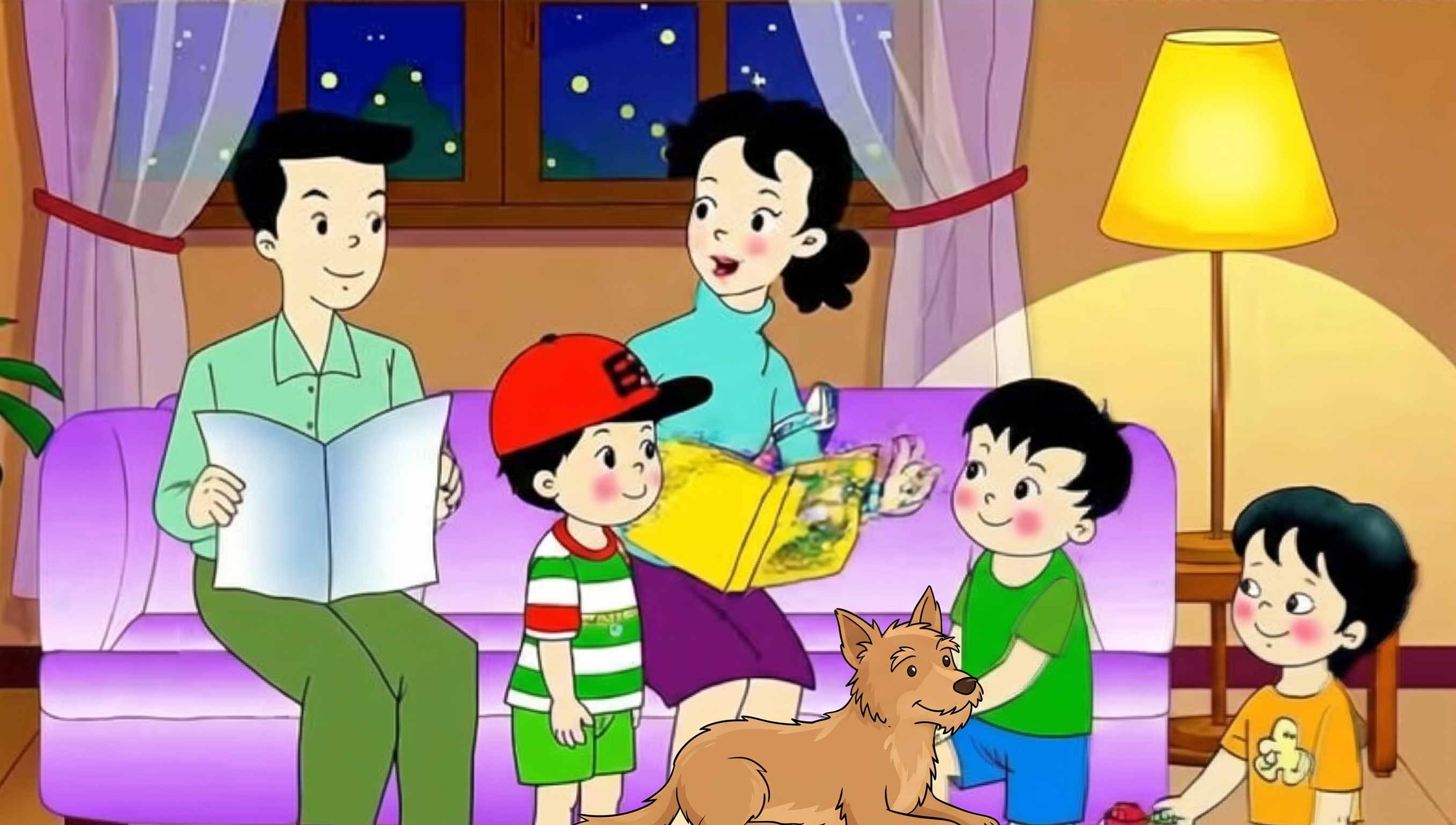
宝宝一家/La familia de Baobao/Baobao's family
爸爸/Papá, padre/Dad, father
妈妈/Mamá, madre/Mum, mother
宝宝/Baobao/Baobao
婷婷/Tíngting/Tíngting
嘟嘟/Dudú/Dudú
洛基/Rocky/Rocky
** 对话/Duìhuà/Diálogo/Dialogue **
--------------------------------------------------------------------------------
宝宝我会数数一、二、三、四、五!/Baobao: ¡Sé contar: uno, dos, tres, cuatro, cinco!/Baobao: I can count: one, two, three, four, five!
婷婷我还会背金木水火土。/Tíngting: Y yo me sé de memoria: «metal, madera, agua, fuego y tierra»./Tíngting: And I can recite: “metal, wood, water, fire, earth.”
嘟嘟爸爸,天地分上下是什么意思?/Dudú: Papá, ¿qué significa «el cielo y la tierra se dividen en arriba y abajo»?/Dudú: Dad, what does “heaven and earth divide into above and below” mean?
爸爸天在上面,地在下面。/Papá: El cielo está arriba y la tierra abajo./Dad: The sky is above and the earth is below.
妈妈太阳和月亮从古到今都照着我们。/Mamá: El sol y la luna nos iluminan desde siempre./Mum: The sun and the moon have shone on us from ancient times until now.
洛基汪汪!/Rocky: ¡Guau!/Rocky: Woof!
▶ 📝 评论 / Comentarios / Comments
金木水火土:数字与自然:
1. 朗读背诵: 课文只有两句,节奏整齐,读起来琅琅上口。让学生拍手朗读,背诵课文。
2. 认识田字格: 学写 一 (yī) 、二 (èr) 、三 (sān) 、上 (shàng) 时,认识 横中线 (héngzhōngxiàn) 和 竖中线 (shùzhōngxiàn) ,注意笔画在田字格中的位置。
3. 了解文化: “金木水火土”是中国古人说的“五行”。可以简单介绍,让学生说说生活中见到的金、木、水、火、土。
1. 朗读背诵: 课文只有两句,节奏整齐,读起来琅琅上口。让学生拍手朗读,背诵课文。
2. 认识田字格: 学写 一 (yī) 、二 (èr) 、三 (sān) 、上 (shàng) 时,认识 横中线 (héngzhōngxiàn) 和 竖中线 (shùzhōngxiàn) ,注意笔画在田字格中的位置。
3. 了解文化: “金木水火土”是中国古人说的“五行”。可以简单介绍,让学生说说生活中见到的金、木、水、火、土。
Comentario Pedagógico: Metal, madera, agua, fuego y tierra: los números y la naturaleza:
1. Leer y memorizar: El texto tiene solo dos frases de ritmo regular, muy fáciles de recitar. Los alumnos leen dando palmas y lo aprenden de memoria.
2. La cuadrícula 田字格: Al escribir 一 (yī) , 二 (èr) , 三 (sān) y 上 (shàng) se conocen la 横中线 (héngzhōngxiàn) y la 竖中线 (shùzhōngxiàn) , y se cuida la posición de cada trazo.
3. Un poco de cultura: “金木水火土” son los “cinco elementos” de la antigua China. Se presentan de forma sencilla y los alumnos dicen dónde los ven en su vida.
Pedagogical Commentary: Metal, Wood, Water, Fire and Earth: numbers and nature:
1. Reading and reciting: The text has just two rhythmic lines that are easy to chant. Students clap as they read and learn it by heart.
2. The 田字格 grid: When writing 一 (yī) , 二 (èr) , 三 (sān) and 上 (shàng) , students meet the 横中线 (héngzhōngxiàn) and the 竖中线 (shùzhōngxiàn) and place each stroke carefully.
3. A little culture: “金木水火土” are the ancient Chinese “five elements”. Introduce them simply and let students say where they see them in daily life.

主题/Zhǔtí/Tema/Theme

其他/Qítā/Otros/Others.

词汇 Cíhuì/Vocabulario/Vocabulary

PDF与视频/PDF,videos Y Quiz/PDF, Videos and Quiz
