** 11_这是电脑/zhè shì diànnǎo/Esto es un ordenador/This is a computer **
** 跟宝宝学西班牙语/Aprenda Español con Baobao/Learn Spanish with Baobao **
BaoBao 的材料使用 3种语言 (中文/西班牙语/英语) 编写,专为让西班牙和英国的儿童以轻松有趣的方式学习中文而设计。但它也适合年龄较大的中国孩子 (成人) 学习英语,特别是西班牙语,为此我们将在这个 子页面 中提供 专属材料。
El material de BaoBao está escrito en 3 idiomas (chino/español/inglés) , pensado especialmente para que los niños españoles e ingleses aprendan chino de forma amena y divertida. Pero también sirve para que niños mayores (adultos) de nacionalidad china aprendan inglés y, especialmente, español, para lo cual en esta subpágina pondremos materiales específicos para ello.
The BaoBao material is written in 3 languages (Chinese/Spanish/English) , specially designed for Spanish and English children to learn Chinese in a fun and enjoyable way. But it is also useful for older Chinese children (adults) to learn English and, especially, Spanish, for which we will include specific materials on this subpage.
Lección 10 / 第十课
La letra C
字母 C · 第一课¡Atención! Tiene doble personalidad.|Suena fuerte (como 嘎) o suave (como 丝) según la vocal que siga.
注意!它有双重性格。根据后面跟着的元音不同,它的发音可以是硬音(像“嘎”一样),也可以是软音(像“丝”一样)。
** 词汇/cíhuì/Vocabulario/Vocabulary**
** 书法/shūfǎ/Caligrafía/Calligraphy**
Trazos para la c
** 歌曲/gēqǔ/Canción/Song**
** 发音/fāyīn/Pronunciación/Pronunciation**
** 测验/cèyàn/Quiz/Quiz**
** 城市/chéngshì/Ciudades/cities**






Lección 11 / 第11课
La letra 这是电脑
字母 这是电脑 · 第一课Aprenda también Español con Baobao/也和宝宝一起学习西班牙语。
这是电脑/zhè shì diànnǎo/Esto es un ordenador/This is a computer
** 词汇/cíhuì/Vocabulario/Vocabulary**
** 歌曲/gēqǔ/Canción/Song**
** 测验/cèyàn/Quiz/Quiz**
** 书法/shūfǎ/Caligrafía/Calligraphy**

PDF: 书法练习/Caligrafia/Handwriting practice
1. 第十课与第十一课评论 (中文)
第十课评论 (字母 C) 字母‘C’的双重性格:这一课的主要挑战是让学生明白,根据所跟随的元音 (vocal)不同,C有两个不同的语音身份。与A、O和U结合时,它是一个强而干燥的音,气流在喉咙处被堵住且不送气(必须提醒他们联想拼音中的哥 gē,绝不是科 kē),用来读出cama或cuna。相反,当它与E或I结合时,它会变成一个与 S 完全相同的软音,非常适合自然地引入像cena或cine这样日常的单词。
2. 语音与音乐的盛宴:卡洛斯家里的这首歌曲是一个绝佳的教学工具,因为它在快乐且富有节奏感的语境中,将字母C的两种发音和谐地交织在一起。通过演唱在cena时吃的cien cosas ricas(一百种美味的东西),孩子们几乎在没有意识到的情况下锻炼了舌头的灵活性和敏捷性,以一种直观且有趣的方式掌握了发音规则。
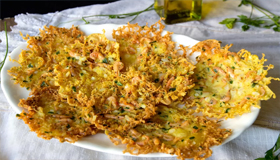
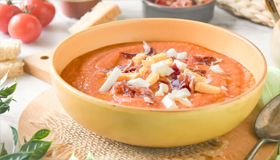
3. 字母‘C’的伟大文化之旅:本课通过西班牙的城市展现了一场壮丽的地理和美食之旅。通过想象从Cáceres(卡塞雷斯)的古迹遗产或Cádiz(加的斯)的海岸光芒,旅行到Cuenca(昆卡)悬空房的魔力或Córdoba(科尔多瓦)的雄伟,极大地丰富了教学体验。将这些字母与migas extremeñas(极端美拉炒面屑)或salmorejo(科尔多瓦冷汤)等传统菜肴联系起来,让学习变成了一场难忘的文化冒险。
4. 第十一课评论 (这是电脑 / 歌曲:打电话)
智能家居词汇:在这一课中,通过引入家用电器,孩子们在描述日常环境的能力上迈出了巨大的步伐。学习诸如电脑(ordenador)、电视(televisor)或冰箱(frigorífico)等核心词汇,使他们能够立即应用指示代词恒等结构Esto es...(这是……)及其相应的疑问句。这是一个将新语言与他们每天在家里看到和使用的真实、有形物体联系起来的极好策略。
5. 给星星打电话的宇宙诗意:给星星打电话这首温馨的歌曲融入了一种让充满童心的孩子们着迷的诗意与空间感。这不仅是将拨号这一常见的沟通行为机械化,歌词还将想象力延伸到了苍穹,激发了孩子们对自然和宇宙的天然好奇心,将语言练习变成了一种充满情感的游戏。
6. 真实互动的结构:掌握与家居科技相关的肯定句和疑问句为流利的对话奠定了基础。通过使用本课的助词来玩猜物品是电视还是电脑的游戏,学生们能够自然地内化西班牙语疑问句的语调和中文回答的坚定性,从而赢得独立交流的信心。
1. Comentario de la Lección 10 (La letra C)
La doble personalidad de la ‘C’: El gran reto de esta lección es enseñar a los alumnos que la C tiene dos identidades fonéticas según la元音 (vocal) que la acompañe. Con A, O y U, se comporta como un sonido fuerte y seco donde se bloquea el aire en la garganta de forma inaspirada (debemos recordarles que piensen en la 哥 gē del pinyin, nunca en 科 kē) para decir cama o cuna. Por el contrario, al unirse con E o I, se transforma en un sonido suave idéntico a la S, ideal para introducir de forma natural palabras tan cotidianas como cena o cine.
2. Un banquete fonético y musical: La canción en la casa de Carlos es una pieza didáctica fantástica porque entrelaza de manera armónica ambos sonidos de la letra C en un contexto alegre y lleno de ritmo. Al cantar sobre las cien cosas ricas que se comen en la cena, los niños entrenan la flexibilidad y agilidad de la lengua casi sin darse cuenta, fijando las reglas de pronunciación de manera intuitiva y divertida.
3. El gran viaje cultural de la ‘C’: Esta lección ofrece un despliegue geográfico y gastronómico espectacular por España a través de sus ciudades. Viajar con la imaginación desde el patrimonio monumental de Cáceres o la luz costera de Cádiz, hasta la magia de las Casas Colgadas de Cuenca o la majestuosidad de Córdoba, enriquece enormemente la experiencia formativa. Asociar estas letras con platos tradicionales como las migas extremeñas o el salmorejo convierte el aprendizaje en una aventura cultural inolvidable.
4. Comentario de la Lección 11 (这是电脑 / Canción: 打电话)
El vocabulario del hogar tecnológico: En esta lección, los niños dan un paso de gigante en su capacidad para describir su entorno cotidiano al introducir los electrodomésticos. Aprender términos esenciales como 电脑 (ordenador), 电视 (televisor) o 冰箱 (frigorífico) les permite aplicar de inmediato las estructuras demostrativas de identidad Esto es... y sus correspondientes preguntas. Es una estrategia excelente para conectar el nuevo idioma con objetos reales y tangibles que ven y usan todos los días en casa.
5. Poesía cósmica para hablar por teléfono: La entrañable canción de 打电话 (Llamar por teléfono) a las estrellas introduce un toque poético y espacial que fascina a los más pequeños. Más allá de mecanizar una acción comunicativa tan común como marcar un número, la letra amplía la imaginación hacia el firmamento, estimulando la curiosidad natural de los niños por la naturaleza y el universo, y convirtiendo la práctica lingüística en un juego afectivo.
6. Estructuras de interacción real: Dominar las frases afirmativas e interrogativas asociadas a la tecnología del hogar sienta las bases de la fluidez conversacional. Al jugar a adivinar si un objeto es un televisor o un ordenador utilizando las partículas de esta lección, los estudiantes interiorizan de forma natural la entonación de las preguntas en español y la firmeza de las respuestas en chino, ganando confianza para comunicarse de manera independiente.
1. Commentary for Lessons 10 and 11 (English)
Commentary for Lesson 10 (The letter C)
2. The double personality of the ‘C’: The big challenge of this lesson is to teach students that the C has two phonetic identities depending on the vocal (vowel) that accompanies it. With A, O, and U, it behaves as a strong and dry sound where the air is blocked in the throat in an unaspirated way (we must remind them to think of the pinyin 哥 gē, never 科 kē) to say cama or cuna. On the contrary, when joining with E or I, it transforms into a soft sound identical to the S, ideal for naturally introducing everyday words like cena or cine.
3. A phonetic and musical banquet: The song in Carlos's house is a fantastic pedagogical piece because it harmoniously intertwines both sounds of the letter C in a joyful and rhythmic context. By singing about the cien cosas ricas eaten at cena, children train their tongue's flexibility and agility almost without realizing it, fixing pronunciation rules in an intuitive and fun way.
4. The great cultural journey of the ‘C’: This lesson offers a spectacular geographical and gastronomic display of Spain through its cities. Traveling with the imagination from the monumental heritage of Cáceres or the coastal light of Cádiz, to the magic of the Hanging Houses of Cuenca or the majesty of Córdoba, greatly enriches the training experience. Associating these letters with traditional dishes like migas extremeñas or salmorejo turns learning into an unforgettable cultural adventure.
5. Commentary for Lesson 11 (这是电脑 / Song: 打电话)
The technological home vocabulary: In this lesson, children take a giant step forward in their ability to describe their daily environment by introducing household appliances. Learning essential terms like 电脑 (computer), 电视 (television), or 冰箱 (refrigerator) allows them to immediately apply the demonstrative identity structures Esto es... and their corresponding questions. It is an excellent strategy to connect the new language with real, tangible objects they see and use every day at home.
6. Cosmic poetry for making a phone call: The endearing song of 打电话 (Making a phone call) to the stars introduces a poetic and spatial touch that fascinates the little ones. Beyond mechanizing a communicative action as common as dialing a number, the lyrics expand the imagination toward the firmament, stimulating children's natural curiosity about nature and the universe, and turning language practice into an affectionate game.
7. Structures for real interaction: Mastering affirmative and interrogative sentences associated with home technology lays the foundation for conversational fluency. By playing games to guess whether an object is a television or a computer using the particles from this lesson, students naturally internalize the intonation of Spanish questions and the firmness of Chinese answers, gaining confidence to communicate independently.
** 目录/mù lù/Indice de la página/Table of contents **
课文/Textos/Texts
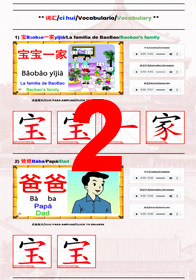
词汇/Vocabulario/Vocabulary
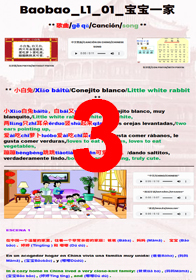
补充材料/Materiales adicionales/Additional Materials

PDF与视频/PDF y videos/PDF and Videos
边玩边学/Aprenda jugando/Learn by Playing
学习西班牙语/Aprenda Español/Learn Spanish
