** 11_这是电脑/zhè shì diànnǎo/Esto es un ordenador/This is a computer **
**额外内容/Contenido adicional/Additional Content**
** 歌曲/gē qǔ/Canción/song **
URL: https://youtu.be/vlHTZ9I52HI

无拼音/Sin pinyin/Without pinyin
中文歌曲/Canción en chino/Chinese song
URL: VACÍO EN ACF
有拼音/Con pinyin/With pinyin
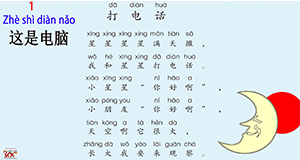
** 打电话/dǎ diànhuà/Llamar por teléfono/To make a phone call **
星星xīngxīng星星xīngxīng满mǎn天tiān撒sā,/Estrellas, estrellas esparcidas por el cielo,/Stars, stars scattered across the sky,
我wǒ和hé星星xīngxīng打dǎ电话diànhuà。/yo llamo por teléfono a las estrellas./I call the stars on the phone.
小xiǎo星星xīngxīng’你’nǐ好hǎo啊a’’,/Pequeña estrella, ‘¡Hola!’,/Little star, ‘Hello!’,
小朋友xiǎopéngyǒu’你’nǐ好hǎo啊a’’,/Amiguito, ‘¡Hola!’,/Little friend, ‘Hello!’,
天空tiānkōng啊a它tā很hěn大dà,/el cielo es muy grande,/the sky is so big,
长大zhǎngdà我wǒ要yào来lái观察guānchá。/cuando crezca iré a observar./when I grow up I will go observe.
拼音连写: 复合词如 '小朋友' (xiǎopéngyǒu) 、'天空' (tiānkōng) 、'长大' (zhǎngdà) 和 '观察' (guānchá) 的拼音已按照现代规范进行了连写。
Agrupación del pinyin: Se agruparon las palabras compuestas como '小朋友' (xiǎopéngyǒu) , '天空' (tiānkōng) , '长大' (zhǎngdà) y '观察' (guānchá) siguiendo la normativa moderna.
Pinyin grouping: Compound words such as '小朋友' (xiǎopéngyǒu) , '天空' (tiānkōng) , '长大' (zhǎngdà) , and '观察' (guānchá) have been grouped according to modern standards.
** 历史 /Lìshǐ/La historia/history **
** 嘟嘟侦探和家里的电器!/¡El detective Dudu y los aparatos de la casa!/Detective Dudu and the household appliances! **
URL: VACÍO EN ACF
AVI: 中文/En chino /En Chinese
“中文/Chino/Chinese”
URL: VACÍO EN ACF

AVI: 西班牙语/En español/En Spanish
“西班牙语/Español/Spanish”
URL: VACÍO EN ACF

AVI: 英语/En inglés /En English
“英语/inglés/English”
“中文/Chino/Chinese”
“西班牙语/Español/Spanish”
“英语/inglés/English”
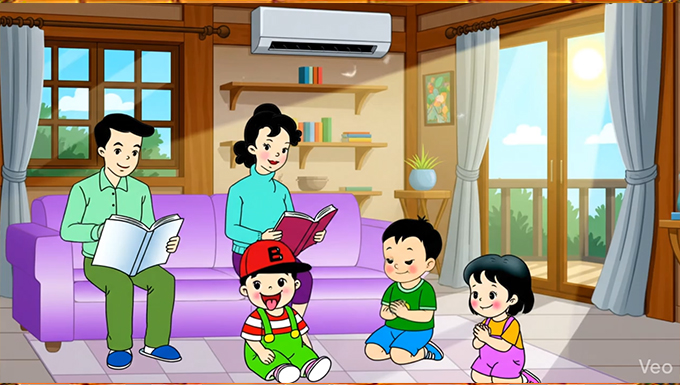
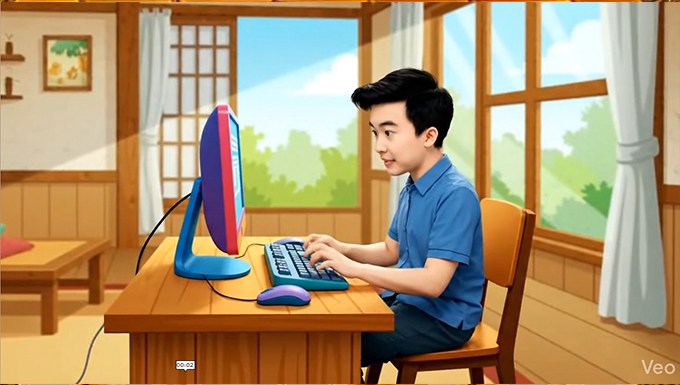
Escena 1: La sala de estar, un día caluroso/今天好热啊!
(Este, esto/This) 是一个非常炎热的夏 (Día, sol/Day, sun) 。大大的太阳在天空中闪耀,外面非常热。
在家里,凉爽的 (Aire acondicionado/Air conditioning) 让大家都感到很舒服。 (Rocky) 趴在地上伸着舌头,想要保持凉快。
Era un (日rì) de verano muy caluroso. El gran (日rì) brillaba en el cielo y afuera hacía muchísimo calor.
Dentro de casa, el fresco (空调kōngtiáo) hacía que todos estuvieran cómodos. (洛基Luòjī) estaba tumbado en el suelo con la lengua fuera, intentando mantenerse fresquito.
It was a very hot summer (日rì) . The big (日rì) was shining in the sky and it was very hot outside.
Inside the house, the cool (空调kōngtiáo) made everyone comfortable. (洛基Luòjī) was lying on the floor with his tongue out, trying to stay cool.
“中文/Chino/Chinese”
“西班牙语/Español/Spanish”
“英语/inglés/English”
Escena 2: Papá trabajando en el ordenador/电器的秘密。
(Dudú) 觉得很无聊,决定玩一个侦探游戏。
——’我要找出家里所有的电器!’他兴奋地宣布。
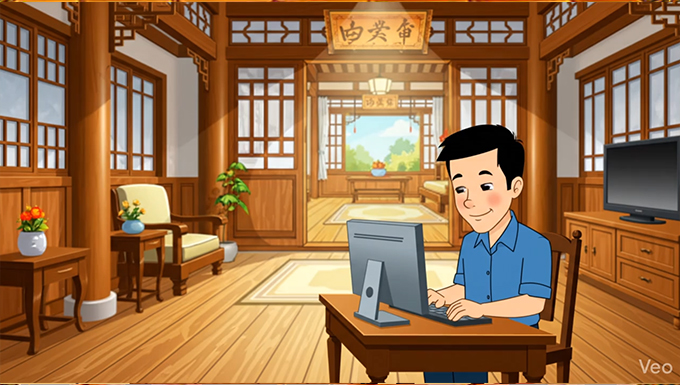
他最先看到的是 (Papá,padre/Dad,father) 正全神贯注地在一台 (Ordenador/Computer) 前工作。
(嘟嘟Dūdū) estaba aburrido y decidió jugar a un juego de detectives.
—¡Voy a descubrir todos los aparatos de la casa! —anunció emocionado.
Lo primero que vio fue a (爸爸Bàba) trabajando muy concentrado frente a un (电脑diànnǎo) .
(嘟嘟Dūdū) was bored and decided to play a detective game.
—’I'm going to discover all the appliances in the house!’ he announced excitedly.
The first thing he saw was (爸爸Bàba) working very concentrated in front of a (电脑diànnǎo) .
“中文/Chino/Chinese”
“西班牙语/Español/Spanish”
“英语/inglés/English”
Escena 3: La pregunta de Dudu/ (Este, esto/This) 是什么?
(Dudú) 慢慢地走过去,指着桌子。
——’ (¿Es esto un ordenador/Is this a computer) ’
(Papá,padre/Dad,father) 微笑着回答:
——’ (Esto es un ordenador/This is a computer) ’
(Dudú) 自豪地点点头。第一个谜团解开了!
(嘟嘟Dūdū) se acercó despacito y señaló la mesa.
— (这zhè是shì电脑diànnǎo吗ma?) ?
(爸爸Bàba) sonrió y respondió:
— (这zhè是shì电脑diànnǎo。) .
(嘟嘟Dūdū) asintió orgulloso. ¡Primer misterio resuelto!
(嘟嘟Dūdū) approached slowly and pointed to the table.
—’ (这zhè是shì电脑diànnǎo吗ma?) ?’
(爸爸Bàba) smiled and answered:
—’ (这zhè是shì电脑diànnǎo。) .’
(嘟嘟Dūdū) nodded proudly. First mystery solved!
“中文/Chino/Chinese”
“西班牙语/Español/Spanish”
“英语/inglés/English”
Escena 4: La llamada de Mamá/ (Mamá/Mom) 的 (Teléfono/Telephone, phone) 。
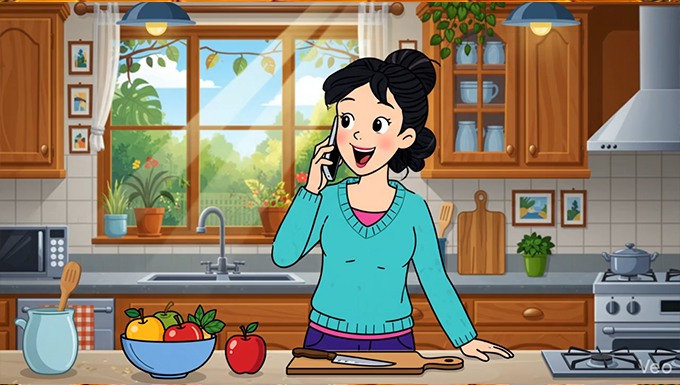
与此同时, (Mamá/Mom) 正在准备美味的下午茶。突然她想起了一件重要的事情。
——’我得给爷爷奶奶 (Llamar por teléfono/To make a phone call) !
‘于是她拿起 (Teléfono/Telephone, phone) ,开始一边 (Llamar por teléfono/To make a phone call) 一边开心地打招呼。
Mientras tanto, (妈妈Māmā) estaba preparando una rica merienda.
De repente recordó algo importante.
—¡Tengo que llamar a los abuelos!
Entonces tomó el (电话diànhuà) y comenzó a (打dǎ电话diànhuà) mientras saludaba alegremente.
Meanwhile, (妈妈Māmā) was preparing a delicious snack.
Suddenly she remembered something important.
—’I have to call the grandparents!’
Then she took the (电话diànhuà) and started (打dǎ电话diànhuà) while greeting happily.
“中文/Chino/Chinese”
“西班牙语/Español/Spanish”
“英语/inglés/English”
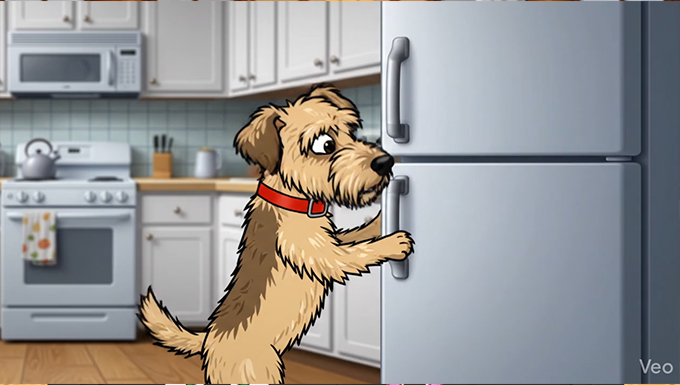
Escena 5: Los niños y la televisión/另一个秘密。
(Dudú) 继续在家里调查。
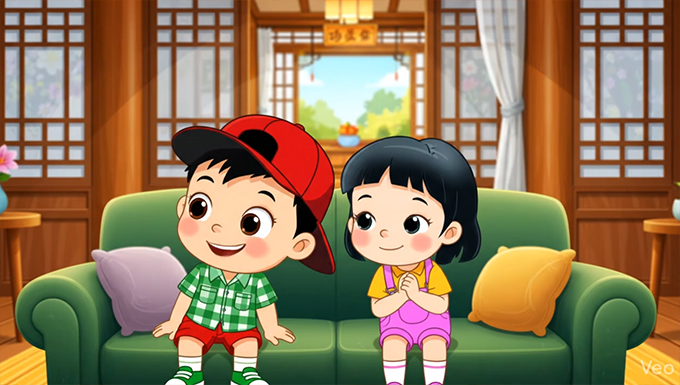
在客厅里,他看到 (Baobao) 和 (Tíngting) 正在看一个充满有趣动物的大屏幕。
(Dudú) 指着屏幕问:
——’ (¿Es esto un televisor/Is this a television) ’
(Baobao) 微笑着回答:
——’是的, (Este, esto/This) 是 (Televisión, televisor/Television, TV) 。’
(嘟嘟Dūdū) siguió investigando la casa.
En el salón vio a (宝宝Bǎobǎo) y (婷婷Tíngtíng) observando una gran pantalla llena de animales divertidos.
(嘟嘟Dūdū) señaló la pantalla y preguntó:
— (这zhè是shì电视diànshì吗ma?) ?
(宝宝Bǎobǎo) respondió sonriendo:
—Sí, es una (电视diànshì) .
(嘟嘟Dūdū) continued investigating the house.
In the living room he saw (宝宝Bǎobǎo) and (婷婷Tíngtíng) watching a big screen full of funny animals.
(嘟嘟Dūdū) pointed to the screen and asked:
—’ (这zhè是shì电视diànshì吗ma?) ?’
(宝宝Bǎobǎo) answered smiling:
—’Yes, it is a (电视diànshì) .’
“中文/Chino/Chinese”
“西班牙语/Español/Spanish”
“英语/inglés/English”
Escena 6: El travieso Rocky/ (Rocky) 和 (Frigorífico/Refrigerator, fridge) !
(Este, esto/This) 时他们听到厨房里传来奇怪的声音。
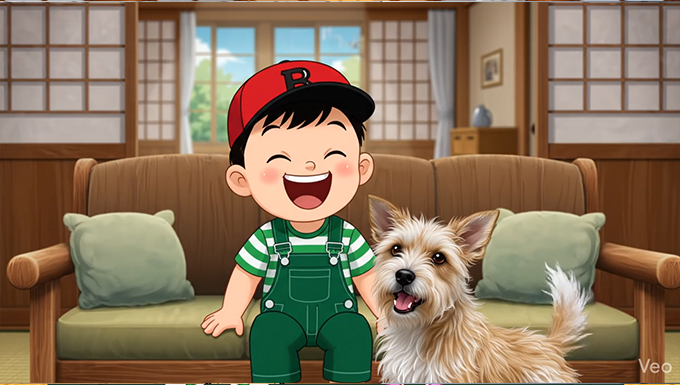
当他们来到厨房时,发现 (Rocky) 正在 (Frigorífico/Refrigerator, fridge) 旁边。
(Este, esto/This) 只调皮的小狗正试着用小爪子打开门,因为它闻到了里面美味的东西。
(Baobao) 忍不住笑了起来。
Entonces escucharon un ruido extraño que venía de la cocina.
Cuando llegaron a la cocina, encontraron a (洛基Luòjī) junto al (冰箱bīngxiāng) .
El travieso perrito intentaba abrir la puerta con la patita porque había olido algo delicioso dentro.
(宝宝Bǎobǎo) no podía parar de reír.
Then they heard a strange noise coming from the kitchen.
When they got to the kitchen, they found (洛基Luòjī) next to the (冰箱bīngxiāng) .
The naughty little dog was trying to open the door with his paw because he had smelled something delicious inside.
(宝宝Bǎobǎo) couldn't stop laughing.
“中文/Chino/Chinese”
“西班牙语/Español/Spanish”
“英语/inglés/English”
Escena 7: Final feliz/美味的结局。
(Baobao) 打开 (Frigorífico/Refrigerator, fridge) ,拿出一根香肠给 (Rocky) 。
全家人聚集在客厅里,享受着 (Aire acondicionado/Air conditioning) 的清凉。
(Dudú) 很高兴,因为他发现了家里所有的新词汇。
(Rocky) 一边嚼着它的奖品,一边似乎在想它也赢得了侦探游戏。
(宝宝Bǎobǎo) abrió el (冰箱bīngxiāng) y sacó una salchicha para (洛基Luòjī) .
Toda la familia se reunió en el salón, disfrutando del fresquito del (空调kōngtiáo) .
(嘟嘟Dūdū) estaba feliz porque había descubierto todas las palabras nuevas de la casa.
(洛基Luòjī) , mientras masticaba su premio, parecía pensar que él también había ganado el juego del detective.
(宝宝Bǎobǎo) opened the (冰箱bīngxiāng) and took out a sausage for (洛基Luòjī) .
The whole family gathered in the living room, enjoying the coolness of the (空调kōngtiáo) .
(嘟嘟Dūdū) was happy because he had discovered all the new words in the house.
(洛基Luòjī) , while chewing his prize, seemed to think that he too had won the detective game.
**未替换/wèi tìhuàn/No sustituidas/Not substituted**
家jiā/Casa,hogar,familia/Home,family/L1_01
** 词汇/cí huì/Vocabulario/Vocabulary **
URL: https://youtu.be/S3OntP1XcjE

AVI: 词汇/Vocabulario/Vocabulary
中文/Chino/Chinese
西班牙语/Español/Spanish
英语/inglés/English
URL: https://youtu.be/tXTBmN73YEs

AVI: 听与重复/Escucha y repite/Listen and repeat



拼音修正与连写: '空调' (aire acondicionado) 的正确拼音是第一声和第二声 (kōngtiáo) ,而不是第四声。此外,所有复合词 (如 diànnǎo, diànshì, bīngxiāng) 的拼音都按照现代规范进行了连写。
Corrección de pinyin y agrupación: El pinyin correcto de '空调' (aire acondicionado) es con primer y segundo tono (kōngtiáo) , no con cuarto. Además, se ha agrupado el pinyin de todas las palabras compuestas (como diànnǎo, diànshì, bīngxiāng) siguiendo la normativa moderna.
Pinyin correction and grouping: The correct pinyin for '空调' (air conditioning) uses the first and second tones (kōngtiáo) , not the fourth. Additionally, the pinyin for all compound words (such as diànnǎo, diànshì, bīngxiāng) has been grouped according to modern standards.
** 家电/jiādiàn/Electrodomésticos (Aparatos de casa)/Home appliances **
“中文/Chino/Chinese”
“西班牙语/Español/Spanish”
“英语/inglés/English”
1) 洗衣机Xǐyījī/Lavadora/Washing machine/妈妈用洗衣机洗衣服。
2) 微波炉Wēibōlú/Microondas/Microwave/他用微波炉热牛奶。
3) 烤箱Kǎoxiāng/Horno/Oven/我们在烤箱里烤蛋糕。
4) 摄像机Shèxiàngjī/Cámara de vídeo/Video camera/爸爸买了一台摄像机。
5) 电风扇Diànfēngshàn/Ventilador eléctrico/Electric fan/天气热,请打开电风扇。
6) 收音机Shōuyīnjī/Radio/Radio/爷爷每天早上听收音机。
7) 录音机Lùyīnjī/Grabadora/Tape recorder (Voice recorder)/桌子上有一台录音机。
8) 吸尘器Xīchénqì/Aspiradora/Vacuum cleaner/嘟嘟用吸尘器打扫房间。
9) 照相机Zhàoxiàngjī/Cámara de fotos/Camera/我用照相机拍了很多照片。
10) 洗碗机Xǐwǎnjī/Lavavajillas (o lavaplatos)/Dishwasher/吃完饭后,我们用洗碗机洗碗。
11) 吹风机Chuīfēngjī/Secador de pelo/Hair dryer/洗完澡后,我用吹风机吹头发。
12) 咖啡机Kāfēijī/Cafetera/Coffee maker/爸爸每天早晨用咖啡机做咖啡。
13) 榨汁机Zhàzhījī/Exprimidor (o licuadora)/Juicer (Blender)/婷婷用榨汁机做果汁。
14) 电熨斗Diànyùndǒu/Plancha eléctrica/Electric iron/妈妈正在用电熨斗熨衣服。
15) 烤面包机Kǎomiànbāojī/Tostadora/Toaster/厨房里有一个烤面包机。
16) 电视机Diànshìjī/Televisión/Television/客厅里有一台很大的电视机。
17) 冰箱Bīngxiāng/Nevera (o refrigerador)/Refrigerator/冰箱里有很多新鲜的水果。
18) 空调Kōngtiáo/Aire acondicionado/Air conditioner/房间里的空调很凉快。
19) 电脑Diànnǎo/Ordenador (o computadora)/Computer/爸爸在用电脑工作。
20) 电饭煲Diànfànbāo/Olla arrocera/Rice cooker/我们每天用电饭煲做米饭。
关于 '机' (jī) 的用法: '机' 的意思是 '机器'。你是否注意到在这个词汇表中有许多词都以 '机' 结尾?在汉语中,我们通常把动作与 '机器' 这个词结合起来,来为电器命名。例如:'洗' (xǐ, 洗涤) + '衣' (yī, 衣服) + '机' (jī, 机器) = 洗衣机 (Lavadora) 。
El uso de '机' (jī) : '机' significa 'máquina'. ¿Notaste que muchas palabras en esta lista terminan en '机'? En chino, a menudo nombramos los electrodomésticos combinando la acción que realizan con la palabra 'máquina'. Por ejemplo: '洗' (xǐ, lavar) + '衣' (yī, ropa) + '机' (jī, máquina) = 洗衣机 (Lavadora) .
The use of '机' (jī) : '机' means 'machine'. Did you notice that many words on this list end in '机'? In Chinese, we often name appliances by combining the action they perform with the word 'machine'. For example: '洗' (xǐ, to wash) + '衣' (yī, clothes) + '机' (jī, machine) = 洗衣机 (Washing machine) .
**听写/Tīngxiě/Dictado/Dictation **
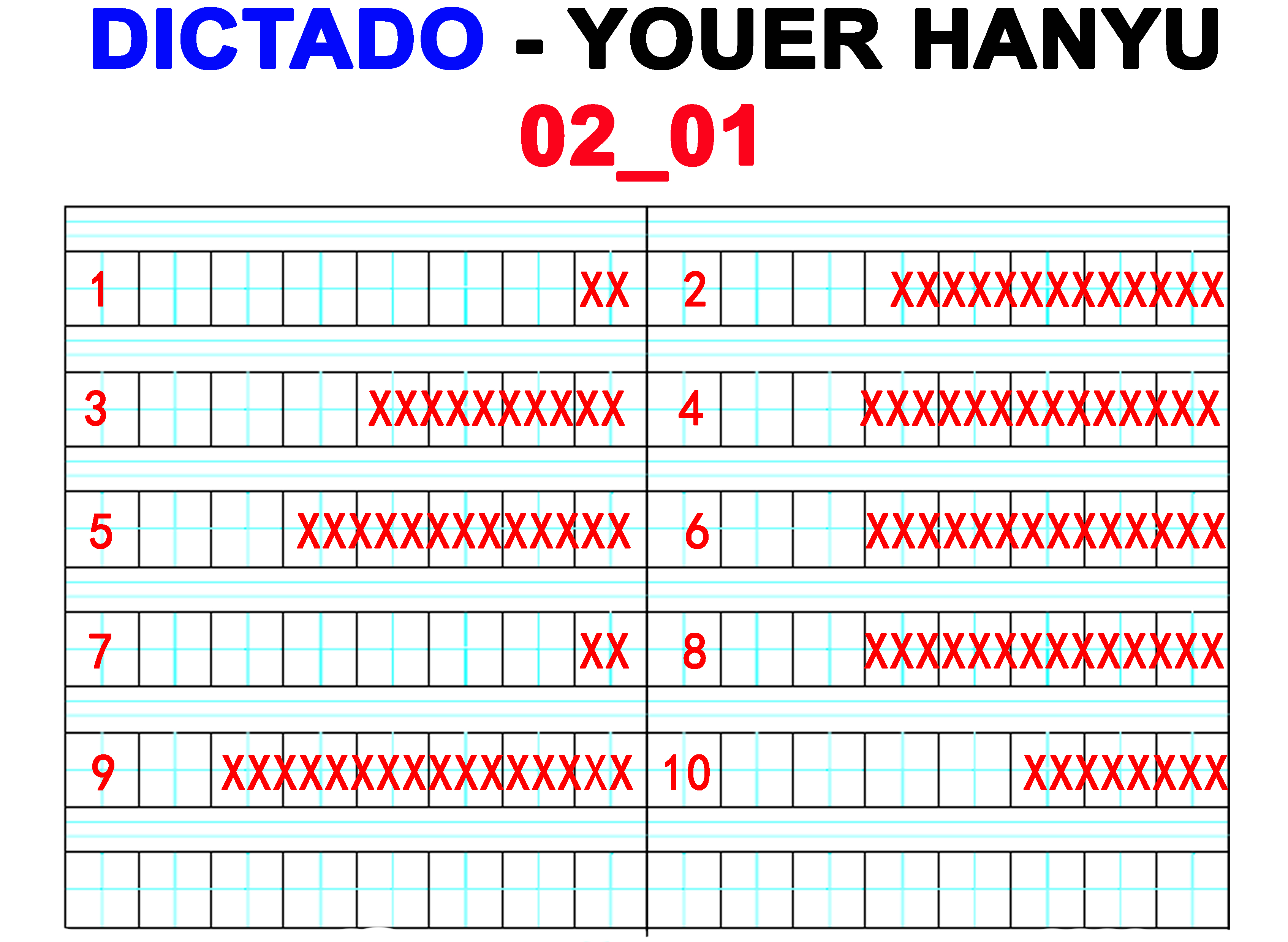
点击放大/clic para ampliar/click to enlarge
听写音频/Audio del dictado/Dictation audio
URL: https://youtu.be/3yUBifFWo7U
AVI: 听写/Dictado/Dictation
URL: https://www.topworksheets.com/teacher/workbooks/7605b59e-8a99-47d1-be12-807a8d8124e8/preview/122fd32d-a459-4d69-b987-206136291c22

DICTADO VOCABULARIO
** 目录/mù lù/Indice de la página/Table of contents **
课文/Textos/Texts
词汇/Vocabulario/Vocabulary
补充材料/Materiales adicionales/Additional Materials

PDF与视频/PDF y videos/PDF and Videos
边玩边学/Aprenda jugando/Learn by Playing
学习西班牙语/Aprenda Español/Learn Spanish
