
PRIMARIA_C1_N1_03_L03
** 03_L03_口耳目/Kǒu ěr mù/Boca, oreja y ojo/Mouth, Ear and Eye **
** 额外内容/Contenido adicional/Additional Content **
** 扩大和替换/Kuòdà hé tìhuàn/Ampliar y sustituir/Expand and substitute. **
松/pino/pine
站如松/de pie como un pino/stand like a pine
上课时,我们要站如松,坐如钟。/En clase hay que estar de pie como un pino y sentados como una campana./In class we should stand like a pine and sit like a bell.
风/viento/wind
行如风/andar como el viento/walk like the wind
他走路很快,真是行如风。/Camina muy rápido, como el viento./He walks very fast – just like the wind.
--------------------------------------------------------------------------------
站如松,坐如钟。行如风,卧如弓。/De pie como un pino, sentado como una campana; andar como el viento, acostado como un arco./Stand like a pine, sit like a bell; walk like the wind, lie like a bow.
--------------------------------------------------------------------------------
口/boca/mouth
· 能说话、吃饭/sirve para hablar y comer./is for speaking and eating.
耳/oreja/ear
· 能听声音/sirve para oír sonidos./is for hearing sounds.
目/ojo/eye
· 能看东西/sirve para ver las cosas./is for seeing things.
手和足/manos y pies/hands and feet
· 能写字、走路/sirven para escribir y andar./are for writing and walking.
** 想一想, 说一说/Xiǎng yi xiǎng, shuō yi shuō/Piensa y responde/Think and answer the following questions **
--------------------------------------------------------------------------------
我们的口、耳、目、手、足能做哪些事?/¿Qué podemos hacer con la boca, las orejas, los ojos, las manos y los pies?/What can we do with our mouth, ears, eyes, hands and feet?
站如松,坐如钟,你能做一做吗?/«De pie como un pino, sentado como una campana»: ¿sabes hacerlo?/“Stand like a pine, sit like a bell” – can you do it?
** 家庭/Jiātíng/FAMILIA/FAMILY **
--------------------------------------------------------------------------------
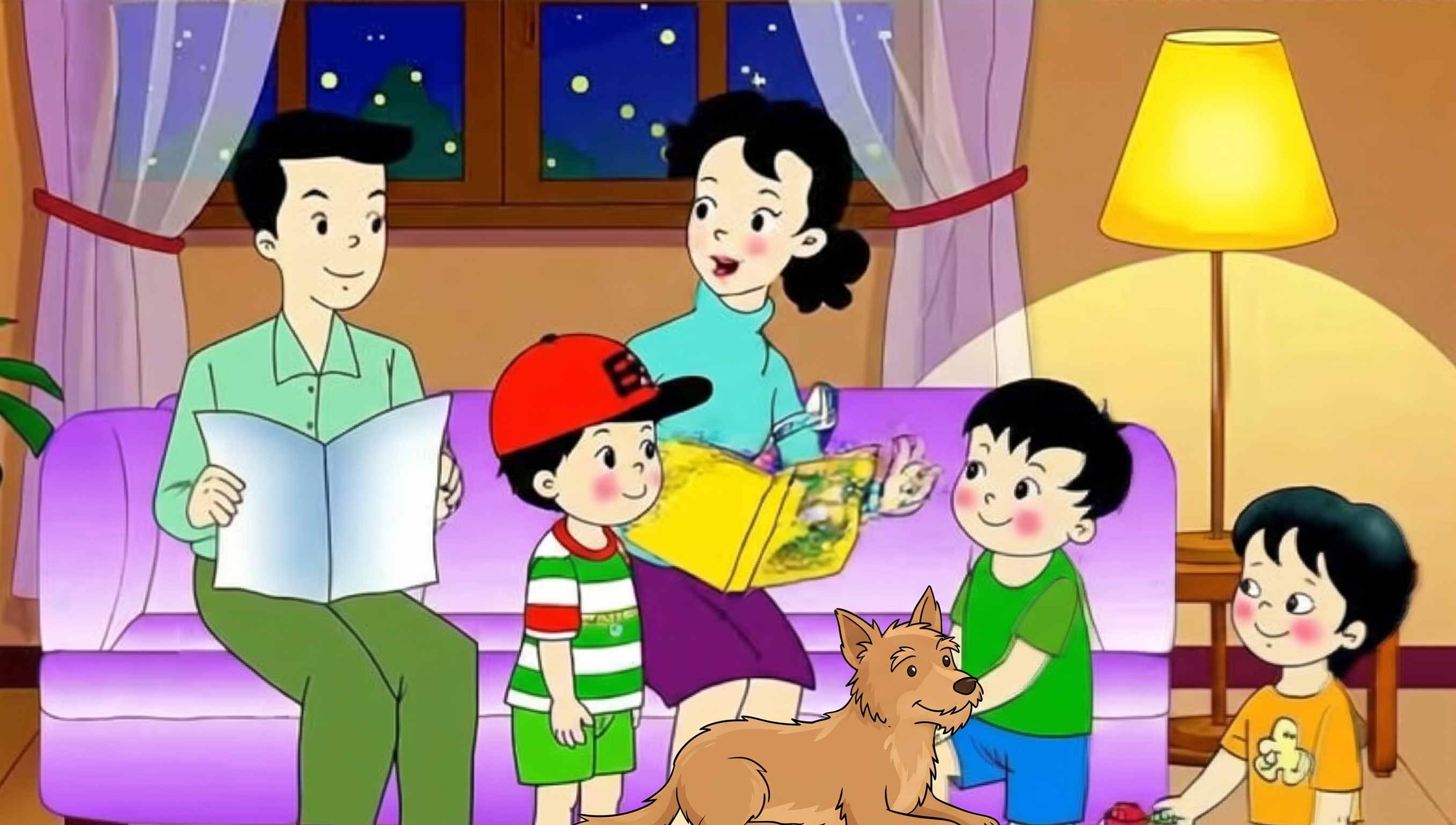
宝宝一家/La familia de Baobao/Baobao's family
爸爸/Papá, padre/Dad, father
妈妈/Mamá, madre/Mum, mother
宝宝/Baobao/Baobao
婷婷/Tíngting/Tíngting
嘟嘟/Dudú/Dudú
洛基/Rocky/Rocky
** 对话/Duìhuà/Diálogo/Dialogue **
--------------------------------------------------------------------------------
妈妈宝宝,用手指一指你的耳朵。/Mamá: Baobao, señala tus orejas con la mano./Mum: Baobao, point to your ears with your hand.
宝宝这是耳,这是目,这是口!/Baobao: ¡Esto es la oreja, esto el ojo, esto la boca!/Baobao: This is my ear, this is my eye, this is my mouth!
嘟嘟我会站如松!你们看,我站得直直的。/Dudú: ¡Yo sé estar de pie como un pino! Mirad qué recto estoy./Dudú: I can stand like a pine! Look how straight I am.
婷婷我坐如钟,一动也不动。/Tíngting: Yo me siento como una campana, sin moverme nada./Tíngting: I sit like a bell, not moving at all.
爸爸真棒!上课的时候也要这样。/Papá: ¡Genial! En clase también hay que hacerlo así./Dad: Great! You should do the same in class.
洛基汪汪!/Rocky: ¡Guau!/Rocky: Woof!
▶ 📝 评论 / Comentarios / Comments
口耳目:认识身体,学会姿势:
1. 看图识字: 课文图中标出了 口 (kǒu) 、耳 (ěr) 、目 (mù) 、手 (shǒu) 、足 (zú) 。让学生指着自己的身体部位读一读,认识这些字。
2. 做动作读儿歌: “站如松 (zhàn rú sōng) ,坐如钟 (zuò rú zhōng) 。行如风 (xíng rú fēng) ,卧如弓 (wò rú gōng) 。”边读边做动作,养成正确的姿势。
3. 说一说: 我们的口、耳、目、手、足能做哪些事?让学生用“我用……”说一句话。
1. 看图识字: 课文图中标出了 口 (kǒu) 、耳 (ěr) 、目 (mù) 、手 (shǒu) 、足 (zú) 。让学生指着自己的身体部位读一读,认识这些字。
2. 做动作读儿歌: “站如松 (zhàn rú sōng) ,坐如钟 (zuò rú zhōng) 。行如风 (xíng rú fēng) ,卧如弓 (wò rú gōng) 。”边读边做动作,养成正确的姿势。
3. 说一说: 我们的口、耳、目、手、足能做哪些事?让学生用“我用……”说一句话。
Comentario Pedagógico: Boca, oreja y ojo: conocer el cuerpo y aprender posturas:
1. Mirar y reconocer: En la ilustración aparecen 口 (kǒu) , 耳 (ěr) , 目 (mù) , 手 (shǒu) y 足 (zú) . Los alumnos señalan cada parte de su cuerpo al leerla.
2. Recitar con gestos: “站如松 (zhàn rú sōng) , 坐如钟 (zuò rú zhōng) . 行如风 (xíng rú fēng) , 卧如弓 (wò rú gōng) .” Se recita haciendo los gestos, para adquirir buenas posturas.
3. Hablar: ¿Qué hacemos con la boca, las orejas, los ojos, las manos y los pies? Los alumnos dicen una frase con “我用……”.
Pedagogical Commentary: Mouth, Ear and Eye: knowing our body and good posture:
1. Look and recognise: The picture labels 口 (kǒu) , 耳 (ěr) , 目 (mù) , 手 (shǒu) and 足 (zú) . Students point to each body part as they read it.
2. Chant with actions: “站如松 (zhàn rú sōng) , 坐如钟 (zuò rú zhōng) . 行如风 (xíng rú fēng) , 卧如弓 (wò rú gōng) .” Students act it out to learn good posture.
3. Speaking: What can we do with our mouth, ears, eyes, hands and feet? Students make a sentence with “我用……”.

主题/Zhǔtí/Tema/Theme

其他/Qítā/Otros/Others.

词汇 Cíhuì/Vocabulario/Vocabulary

PDF与视频/PDF,videos Y Quiz/PDF, Videos and Quiz
