· 小虾Xiǎoxiā在zài水里游shuǐlǐyóu。/La gambita nada en el agua./The little prawn swims in the water.
桥Qiáo/puente/bridge
· 河Hé上shàng有yǒu一座yízuò桥qiáo。/Sobre el río hay un puente./There's a bridge over the river.
辣椒Làjiāo/guindilla/chilli
· 辣椒Làjiāo很hěn辣là。/La guindilla pica mucho./Chillies are very hot.
** 想一想, 说一说/Xiǎng yi xiǎng, shuō yi shuō/Piensa y responde/Think and answer the following questions **
(1)拼一拼Pīn yi pīn:h—u—ā→huā,x—i—ā→xiā,说shuō说shuō三拼音节sānpīnyīnjié怎么zěnme读dú。/Une: h—u—ā→huā, x—i—ā→xiā. ¿Cómo se leen las sílabas de tres partes?/Blend: h—u—ā→huā, x—i—ā→xiā. How do you read three-part syllables?
(2)读一读Dú yi dú“我wǒ给gěi小树苗xiǎoshùmiáo浇水jiāoshuǐ”,说shuō说shuō小朋友xiǎopéngyǒu在zài做zuò什么shénme。/Lee «我给小树苗浇水» y di qué hace el niño./Read “我给小树苗浇水” and say what the child is doing.
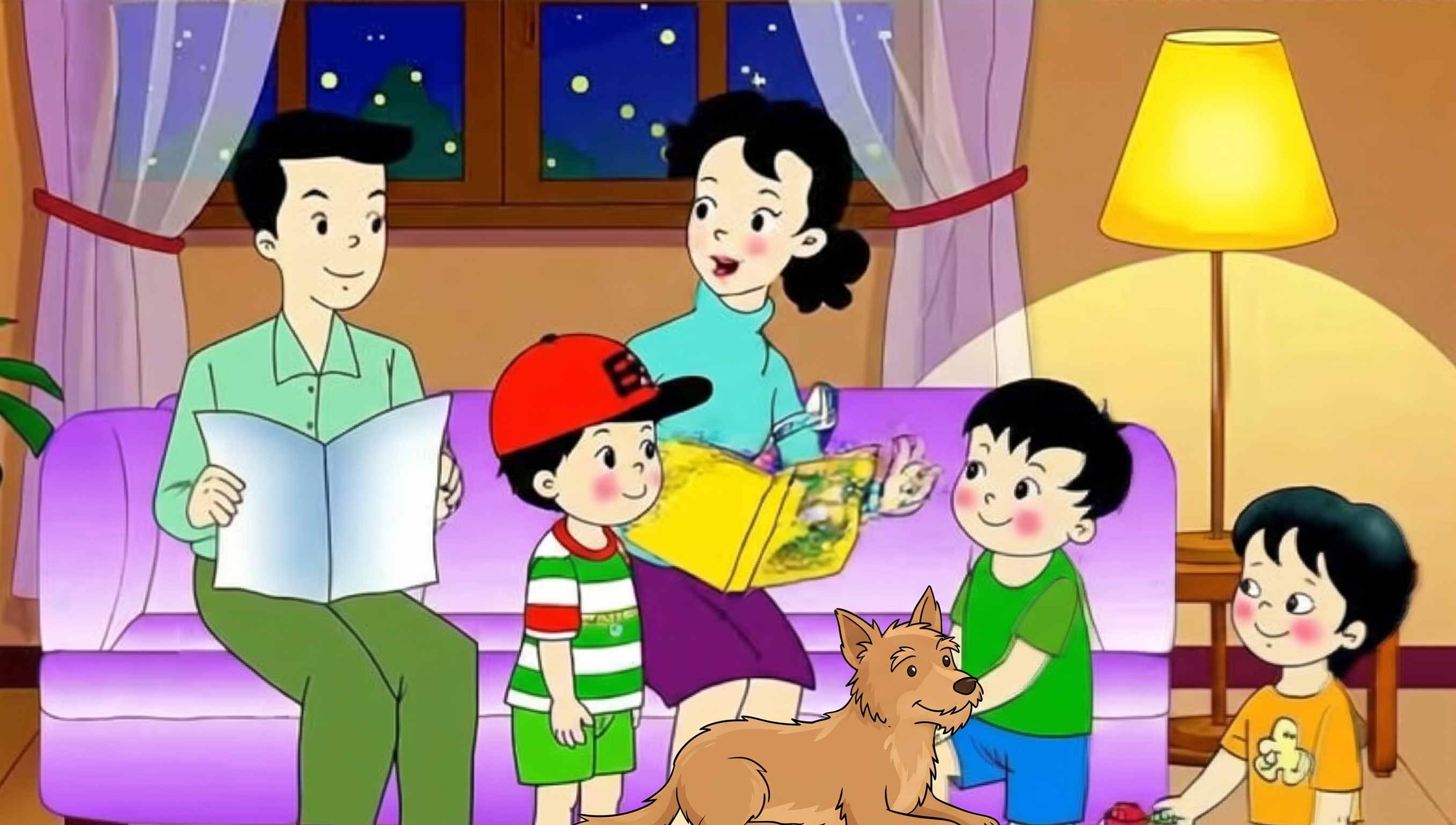
** 庭/Jiātíng/FAMILIA/FAMILY **
宝宝Bǎobao一yī家jiā/La familia de Baobao/Baobao's family
爸爸Bàba/Papá, padre/Dad, father
妈妈Māma/Mamá, madre/Mum, mother
宝宝Bǎobao/Baobao/Baobao
婷婷Tíngtíng/Tíngting/Tíngting
嘟嘟Dūdū/Dudú/Dudú
洛基Luòjī/Rocky/Rocky
** 对话/Duìhuà/Diálogo/Dialogue **
嘟嘟Dūdū:爸爸Bàba,动物园dòngwùyuán里lǐ的de鸵鸟tuóniǎo好hǎo大dà啊a!/Dudú: Papá, ¡qué grande es el avestruz del zoo!/Dudú: Dad, the ostrich at the zoo is so big!
爸爸Bàba:我们Wǒmen过guò了le小桥xiǎoqiáo,再zài去qù看kàn花huā。/Papá: Cruzamos el puentecito y luego vamos a ver las flores./Dad: Let's cross the little bridge and then go and see the flowers.
婷婷Tíngtíng:中午Zhōngwǔ我wǒ想xiǎng吃chī虾xiā,还要háiyào用yòng筷子kuàizi!/Tíngting: A mediodía quiero comer gambas, ¡y con palillos!/Tíngting: At lunchtime I want to eat prawns – with chopsticks!
宝宝Bǎobǎo:我Wǒ不吃bùchī辣椒làjiāo,太tài辣là了le!/Baobao: Yo no como guindilla, ¡pica demasiado!/Baobao: I don't eat chillies – they're too hot!
妈妈Māma:吃完饭Chīwánfàn,别忘了biéwàngle用yòng刷子shuāzi刷shuā鞋xié。/Mamá: Después de comer, no olvidéis cepillar los zapatos con el cepillo./Mum: After lunch, don't forget to brush your shoes with the brush.
Comentario Pedagógico: Sílabas de tres partes: h-u-a → hua: 1. Vocal intermedia: En las sílabas de tres partes, la «i», «u» o «ü» del medio se dice rápido. 2. Regla: «Consonante suave, intermedia rápida y final sonora: las tres seguidas, sin parar». 3. Práctica: Primero se leen por separado y luego juntas: h—u—ā→huā.
Pedagogical Commentary: Three-part syllables: h-u-a → hua: 1. Medial: In three-part syllables, the middle “i”, “u” or “ü” is said quickly. 2. Rule: “Initial soft, medial quick, final loud: read all three together smoothly.” 3. Practice: First read them separately, then together: h—u—ā→huā.
@ Pinyin 资料 (PDF, MP3 等) 的版权归属于:中国华文教育网 - Overseas Chinese Language and Culture Education Online。
@ Los materiales Pinyin (PDF, MP3, etc.) son propiedad de: 中国华文教育网 - Overseas Chinese Language and Culture Education Online.
@ The materials Pinyin (PDF, MP3, etc.) are the property of: 中国华文教育网 - Overseas Chinese Language and Culture Education Online.