
PINYIN / 拼音
MT
01: a o e
02: i u ü
03: b p
04: m f
05: ai ei ui
06: ao ou iu
07: d t
08: n l
09: g k h
10: j q x
11: z c s
12: zh ch sh r
13: y w
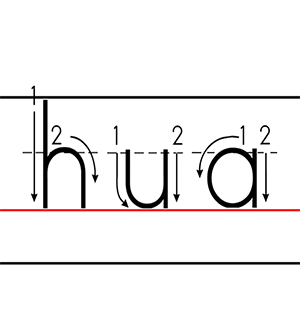
14: h-u-a-hua
15: ie üe er
16: an en in
17: un ün
18: ang eng ing ong
Pinyin_14_h-u-a-hua
** 第十四课:h-u-a → hua/Dì shísì kè: h-u-a → hua/Lección 14: h-u-a → hua/Lesson 14: h-u-a → hua **
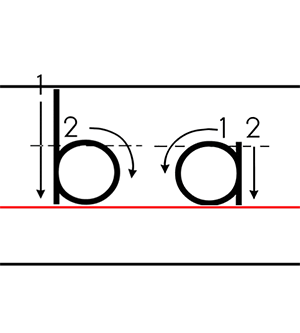
Practica aquí · 在这里练习
--------------------------------------------------------------------------------
两拼音节Liǎngpīnyīnjié由yóu声母shēngmǔ和hé韵母yùnmǔ两liǎng部分bùfèn组成zǔchéng,比如bǐrú“b”和hé“a”拼成pīnchéng“ba”。/Una sílaba de dos partes está formada por una consonante inicial y una final, por ejemplo «b» + «a» = «ba»./A two-part syllable is made up of an initial consonant and a final, for example “b” + “a” = “ba”.
拼读Pīndú时shí,先读xiāndú声母shēngmǔ,再zài读dú韵母yùnmǔ,然后ránhòu连lián起来qǐlái读dú成chéng一个yígè音节yīnjié。/Para leerla, se dice primero la consonante, luego la final, y después se unen en una sola sílaba./To read it, you say the initial first, then the final, and then join them into a single syllable.
--------------------------------------------------------------------------------

--------------------------------------------------------------------------------
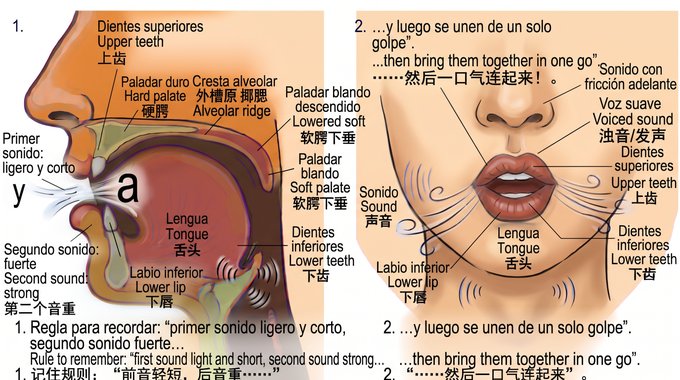
• 口诀Kǒujué:“前音qiányīn轻短qīngduǎn后音hòuyīn重zhòng,两liǎng音yīn相连xiānglián猛měng一yí碰pèng。”/Regla para recordar: «el primer sonido, suave y breve; el segundo, fuerte; y los dos se juntan de golpe»./Rule to remember: “first sound light and short, second sound strong, then bring them together in one go”.
• 声母Shēngmǔ要yào读dú得de轻qīng、读dú得de短duǎn,不要búyào拖长tuōcháng。/La consonante se dice suave y breve, sin alargarla./The initial is said lightly and briefly, without dragging it out.
• 韵母Yùnmǔ要yào读dú得de响亮xiǎngliàng,声调shēngdiào标biāo在zài韵母yùnmǔ上shàng。/La final se dice con fuerza, y el tono va marcado sobre ella./The final is said strongly, and the tone mark goes on it.
1) 八bā/b-ā → bā (ocho)/b-ā → bā (eight)
2) 妈mā/m-ā → mā (mamá)/m-ā → mā (mum)
3) 大dà/d-à → dà (grande)/d-à → dà (big)
4) 喝hē/h-ē → hē (beber)/h-ē → hē (to drink)
5) 狗gǒu/g-ǒu → gǒu (perro)/g-ǒu → gǒu (dog)
6) 来lái/l-ái → lái (venir)/l-ái → lái (to come)
7) 书shū/sh-ū → shū (libro)/sh-ū → shū (book)
8) 女nǚ/n-ǚ → nǚ (mujer)/n-ǚ → nǚ (woman)
9) 土tǔ/t-ǔ → tǔ (tierra)/t-ǔ → tǔ (soil)
10) 口kǒu/k-ǒu → kǒu (boca)/k-ǒu → kǒu (mouth)
11) 米mǐ/m-ǐ → mǐ (arroz)/m-ǐ → mǐ (rice)
12) 他tā/t-ā → tā (él)/t-ā → tā (he)
13) 哭kū/k-ū → kū (llorar)/k-ū → kū (to cry)
14) 皮pí/p-í → pí (piel)/p-í → pí (skin)
15) 车chē/ch-ē → chē (coche)/ch-ē → chē (car)
--------------------------------------------------------------------------------
多Duō读dú多duō练liàn,就jiù能néng把bǎ声母shēngmǔ和hé韵母yùnmǔ拼得pīnde又yòu快又准kuàiyòuzhǔn。/Con práctica, se aprende a unir la consonante y la final de forma rápida y precisa./With practice, you learn to join the initial and the final quickly and accurately.

Practica aquí · 在这里练习
--------------------------------------------------------------------------------
三拼音节Sānpīnyīnjié由yóu声母shēngmǔ、介母jièmǔ和hé韵母yùnmǔ三sān部分bùfèn组成zǔchéng,比如bǐrú“h”“u”“a”拼成pīnchéng“hua”。/Una sílaba de tres partes está formada por una consonante inicial, una vocal intermedia y una final, por ejemplo «h» + «u» + «a» = «hua»./A three-part syllable is made up of an initial, a medial vowel and a final, for example “h” + “u” + “a” = “hua”.
介母Jièmǔ只有zhǐyǒu“i”“u”“ü”三个sāngè,它们tāmen在zài声母shēngmǔ和hé韵母yùnmǔ中间zhōngjiān,起qǐ连接liánjiē的de作用zuòyòng。/Las vocales intermedias son solo tres, «i», «u» y «ü», y sirven de puente entre la consonante y la final./There are only three medials, “i”, “u” and “ü”, and they act as a bridge between the initial and the final.
--------------------------------------------------------------------------------

--------------------------------------------------------------------------------
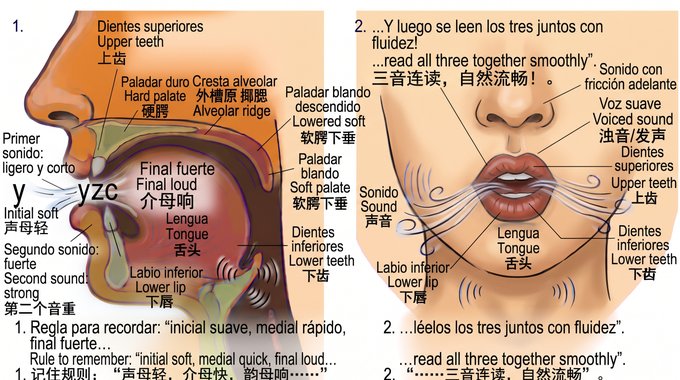
• 口诀Kǒujué:“声轻shēngqīng介快jièkuài韵母响yùnmǔxiǎng,三sān音yīn连读liándú很hěn顺当shùndang。”/Regla para recordar: «consonante suave, intermedia rápida y final sonora; las tres seguidas, sin parar»./Rule to remember: “initial soft, medial quick, final loud; read all three together smoothly”.
• 声母Shēngmǔ读dú得de轻qīng,介母jièmǔ读dú得de快kuài,韵母yùnmǔ读dú得de响亮xiǎngliàng。/La consonante se dice suave, la intermedia rápida y la final con fuerza./The initial is said softly, the medial quickly and the final strongly.
• 三个Sāngè音yīn要yào连在一起liánzàiyìqǐ读dú,中间zhōngjiān不要búyào停tíng。/Los tres sonidos se leen seguidos, sin pausas./The three sounds are read together, without pauses.
1) 花huā/h-u-ā → huā (flor)/h-u-ā → huā (flower)
2) 瓜guā/g-u-ā → guā (melón)/g-u-ā → guā (melon)
3) 夸kuā/k-u-ā → kuā (elogiar)/k-u-ā → kuā (to praise)
4) 锅guō/g-u-ō → guō (olla)/g-u-ō → guō (pot, wok)
5) 火huǒ/h-u-ǒ → huǒ (fuego)/h-u-ǒ → huǒ (fire)
6) 阔kuò/k-u-ò → kuò (ancho)/k-u-ò → kuò (wide)
7) 刷shuā/sh-u-ā → shuā (cepillar)/sh-u-ā → shuā (to brush)
8) 家jiā/j-i-ā → jiā (casa, familia)/j-i-ā → jiā (home, family)
9) 下xià/x-i-à → xià (abajo)/x-i-à → xià (down)
10) 恰qià/q-i-à → qià (justo)/q-i-à → qià (just, exactly)
11) 桥qiáo/q-i-áo → qiáo (puente)/q-i-áo → qiáo (bridge)
12) 鸟niǎo/n-i-ǎo → niǎo (pájaro)/n-i-ǎo → niǎo (bird)
13) 快kuài/k-u-ài → kuài (rápido)/k-u-ài → kuài (fast)
14) 说shuō/sh-u-ō → shuō (hablar)/sh-u-ō → shuō (to speak)
15) 两liǎng/l-i-ǎng → liǎng (dos)/l-i-ǎng → liǎng (two)
--------------------------------------------------------------------------------
学会Xuéhuì三拼音节sānpīnyīnjié,就jiù能néng读出dúchū很多hěnduō常用字chángyòngzì,比如bǐrú花huā、瓜guā、家jiā。/Al dominar las sílabas de tres partes, se pueden leer muchas palabras comunes, como huā (flor), guā (melón) o jiā (casa)./Once you master three-part syllables, you can read many common words, such as huā (flower), guā (melon) or jiā (home).
bā bá bǎ bà
bā
bá
bǎ
bà
huā huá huǎ huà
huā
huá
huǎ
huà
![]()


