** 1_识字(一)/Shízì (yī)/Reconocimiento de caracteres (1)/Character Recognition (1) **
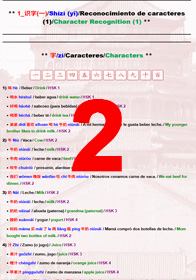
** 字/zì/Caracteres/Characters **
1) 一/uno/one/HSK 1
• 一月/enero/January/HSK 1
• 一起/juntos/together/HSK 1
• 一定/seguro, ciertamente/certainly, definitely/HSK 3
• 桌子上有一本书/Hay un libro en la mesa./There is one book on the table.
--------------------------------------------------------------------------------
2) 二/dos/two/HSK 1
• 二月/febrero/February/HSK 1
• 二十/veinte/twenty/HSK 1
• 二号/día dos, número dos/number two, second day/HSK 1
• 今天是二月二十号/Hoy es veinte de febrero./Today is February twentieth.
--------------------------------------------------------------------------------
3) 三/tres/three/HSK 1
• 三月/marzo/March/HSK 1
• 三个/tres (cosas, personas)/three (items, people)/HSK 1
• 三百/trescientos/three hundred/HSK 1
• 我有三个好朋友/Tengo tres buenos amigos./I have three good friends.
--------------------------------------------------------------------------------
4) 四/cuatro/four/HSK 1
• 四月/abril/April/HSK 1
• 四季/cuatro estaciones/four seasons/HSK 5
• 四周/alrededor, en todas direcciones/all around/HSK 5
• 一年有四个季节/Un año tiene cuatro estaciones./A year has four seasons.
--------------------------------------------------------------------------------
5) 五/cinco/five/HSK 1
• 五月/mayo/May/HSK 1
• 五张/cinco (hojas, billetes)/five (flat objects)/HSK 1
• 五彩/multicolor, colorido/multicolored/Fuera de HSK
• 房间里有五张椅子/Hay cinco sillas en la habitación./There are five chairs in the room.
--------------------------------------------------------------------------------
6) 六/seis/six/HSK 1
• 六月/junio/June/HSK 1
• 六条/seis (tiras, peces)/six (long/thin objects)
• 六百/seiscientos/six hundred/HSK 1
• 六月的天气很热/El clima en junio es muy caluroso./The weather in June is very hot.
--------------------------------------------------------------------------------
7) 七/siete/seven/HSK 1
• 七月/julio/July/HSK 1
• 七天/siete días/seven days/HSK 1
• 七本书/siete libros/seven books/HSK 1
• 一个星期有七天/Una semana tiene siete días./A week has seven days.
--------------------------------------------------------------------------------
8) 八/ocho/eight/HSK 1
• 八月/agosto/August/HSK 1
• 八百/ochocientos/eight hundred/HSK 1
• 八方/todas direcciones/all directions/Fuera de HSK
• 爸爸八月去北京/Papá va a Pekín en agosto./Dad goes to Beijing in August.
--------------------------------------------------------------------------------
9) 九/nueve/nine/HSK 1
• 九月/septiembre/September/HSK 1
• 九龙/Kowloon (Nueve Dragones)/Kowloon/Fuera de HSK
• 九江/Jiujiang (ciudad china)/Jiujiang (city)/Fuera de HSK
• 妹妹的生日在九月/El cumpleaños de mi hermana menor es en septiembre./My younger sister's birthday is in September.
--------------------------------------------------------------------------------
10) 十/diez/ten/HSK 1
• 十月/octubre/October/HSK 1
• 十年/diez años/ten years/HSK 1
• 十分/muy, extremadamente/very, extremely/HSK 3
• 他十分喜欢吃苹果/A él le gusta mucho comer manzanas./He likes to eat apples very much.
--------------------------------------------------------------------------------
11) 百/cien/hundred/HSK 1
• 百年/cien años, centenario/a hundred years, century/HSK 4
• 百姓/gente común, pueblo/common people/HSK 5
• 百万/un millón/one million/HSK 4
• 这个学校有一百年了/Esta escuela tiene cien años./This school is a hundred years old.
--------------------------------------------------------------------------------
▶ 📝 评论 / Comentarios / Comments
教学点评:数字及其视觉魔力:
1. 月份的绝对逻辑: 在教授这一系列时,学生们最大的成就是发现中文里的月份是如何构成的。只需在数字后面加上“月”字 (月) ,他们就能神奇地从会数1到12,变成认识一年中所有的月份 (一月, 二月...) 。这能瞬间极大地增强他们的自信心。
2. 悄然引入量词: 你提供的数字示例是巧妙引入量词的绝佳契机。像 三个 (三个物品) 、五张 (五个扁平状物体) 或 六条 (六个长条状物体) 这样的短语,能让孩子们的耳朵和眼睛逐渐习惯中文里的数字在计算物体时很少单独出现这一特点。
3. 视觉乘法的概念: 关于数字 一百 (百) ,很有趣的一点是可以展示汉字的组合是如何以极其纯粹的数学逻辑形成更大的数字的。将“三”和“百”结合起来,瞬间就形成了 “三百” (三百) 。这种结构的透明性会让学生们觉得这门语言非常平易近人(站在他们这一边)。
1. 月份的绝对逻辑: 在教授这一系列时,学生们最大的成就是发现中文里的月份是如何构成的。只需在数字后面加上“月”字 (月) ,他们就能神奇地从会数1到12,变成认识一年中所有的月份 (一月, 二月...) 。这能瞬间极大地增强他们的自信心。
2. 悄然引入量词: 你提供的数字示例是巧妙引入量词的绝佳契机。像 三个 (三个物品) 、五张 (五个扁平状物体) 或 六条 (六个长条状物体) 这样的短语,能让孩子们的耳朵和眼睛逐渐习惯中文里的数字在计算物体时很少单独出现这一特点。
3. 视觉乘法的概念: 关于数字 一百 (百) ,很有趣的一点是可以展示汉字的组合是如何以极其纯粹的数学逻辑形成更大的数字的。将“三”和“百”结合起来,瞬间就形成了 “三百” (三百) 。这种结构的透明性会让学生们觉得这门语言非常平易近人(站在他们这一边)。
Comentario Pedagógico: Los números y su magia visual:
1. La lógica aplastante de los meses: Al enseñar esta serie, el mayor triunfo para los alumnos es descubrir cómo se construyen los meses en chino. Simplemente añadiendo la palabra luna/mes (月) detrás de un número, pasan mágicamente de saber contar del 1 al 12, a saber todos los meses del año (一月, 二月...) . Es una inyección de confianza inmediata.
2. Introducción silenciosa a los clasificadores: Los ejemplos numéricos que has aportado son una excusa excelente para introducir de forma sutil los clasificadores. Frases como 三个 (tres cosas) , 五张 (cinco objetos planos) o 六条 (seis cosas alargadas) van acostumbrando el oído y la vista de los niños a que en chino los números rara vez van solos cuando cuentan objetos.
3. El concepto de multiplicación visual: Con el número cien (百) , es interesante mostrar cómo la combinación de caracteres forma cifras mayores con una lógica matemática muy pura. Uniendo 'tres' y 'cien' se forma al instante 'trescientos' (三百) . Esta transparencia estructural hace que los estudiantes sientan que el idioma está de su lado.
1. La lógica aplastante de los meses: Al enseñar esta serie, el mayor triunfo para los alumnos es descubrir cómo se construyen los meses en chino. Simplemente añadiendo la palabra luna/mes (月) detrás de un número, pasan mágicamente de saber contar del 1 al 12, a saber todos los meses del año (一月, 二月...) . Es una inyección de confianza inmediata.
2. Introducción silenciosa a los clasificadores: Los ejemplos numéricos que has aportado son una excusa excelente para introducir de forma sutil los clasificadores. Frases como 三个 (tres cosas) , 五张 (cinco objetos planos) o 六条 (seis cosas alargadas) van acostumbrando el oído y la vista de los niños a que en chino los números rara vez van solos cuando cuentan objetos.
3. El concepto de multiplicación visual: Con el número cien (百) , es interesante mostrar cómo la combinación de caracteres forma cifras mayores con una lógica matemática muy pura. Uniendo 'tres' y 'cien' se forma al instante 'trescientos' (三百) . Esta transparencia estructural hace que los estudiantes sientan que el idioma está de su lado.
Pedagogical Commentary: Numbers and their visual magic:
1. The overwhelming logic of the months: When teaching this series, the greatest triumph for students is discovering how months are constructed in Chinese. Simply by adding the word moon/month (月) after a number, they magically go from knowing how to count from 1 to 12, to knowing all the months of the year (一月, 二月...) . It is an immediate confidence boost.
2. Silent introduction to measure words: The numerical examples you have provided are an excellent excuse to subtly introduce measure words (classifiers). Phrases like 三个 (three things) , 五张 (five flat objects) or 六条 (six elongated things) get the children's ears and eyes used to the fact that in Chinese, numbers rarely go alone when counting objects.
3. The concept of visual multiplication: With the number one hundred (百) , it is interesting to show how the combination of characters forms larger figures with a very pure mathematical logic. Joining 'three' and 'hundred' instantly forms 'three hundred' (三百) . This structural transparency makes students feel that the language is on their side.
1. The overwhelming logic of the months: When teaching this series, the greatest triumph for students is discovering how months are constructed in Chinese. Simply by adding the word moon/month (月) after a number, they magically go from knowing how to count from 1 to 12, to knowing all the months of the year (一月, 二月...) . It is an immediate confidence boost.
2. Silent introduction to measure words: The numerical examples you have provided are an excellent excuse to subtly introduce measure words (classifiers). Phrases like 三个 (three things) , 五张 (five flat objects) or 六条 (six elongated things) get the children's ears and eyes used to the fact that in Chinese, numbers rarely go alone when counting objects.
3. The concept of visual multiplication: With the number one hundred (百) , it is interesting to show how the combination of characters forms larger figures with a very pure mathematical logic. Joining 'three' and 'hundred' instantly forms 'three hundred' (三百) . This structural transparency makes students feel that the language is on their side.
@ Zhongwen 资料 (SWF, PDF, MP3 等) 的版权归属于:中国华文教育网 - Overseas Chinese Language and Culture Education Online。
@ Los materiales Zhongwen (SWF, PDF, MP3, etc.) son propiedad de: 中国华文教育网 - Overseas Chinese Language and Culture Education Online.
@ The materials Zhongwen (SWF, PDF, MP3, etc.) are the property of: 中国华文教育网 - Overseas Chinese Language and Culture Education Online.
SWF
字/zì/Caracteres/Characters

PDF与视频/PDF y videos/PDF and Videos
