** 03_谢谢xièxiè/Gracias/Thank you **
** 跟宝宝学西班牙语/Aprenda Español con Baobao/Learn Spanish with Baobao **
BaoBao 的材料使用 3种语言 (中文/西班牙语/英语) 编写,专为让西班牙和英国的儿童以轻松有趣的方式学习中文而设计。但它也适合年龄较大的中国孩子 (成人) 学习英语,特别是西班牙语,为此我们将在这个 子页面 中提供 专属材料。
El material de BaoBao está escrito en 3 idiomas (chino/español/inglés) , pensado especialmente para que los niños españoles e ingleses aprendan chino de forma amena y divertida. Pero también sirve para que niños mayores (adultos) de nacionalidad china aprendan inglés y, especialmente, español, para lo cual en esta subpágina pondremos materiales específicos para ello.
The BaoBao material is written in 3 languages (Chinese/Spanish/English) , specially designed for Spanish and English children to learn Chinese in a fun and enjoyable way. But it is also useful for older Chinese children (adults) to learn English and, especially, Spanish, for which we will include specific materials on this subpage.
Lección 02 / 第02课
La letra A
字母 A · 第一课La vocal base, la más frecuente del español. Suena igual que la ‘a’ en 妈 (mā). .
基础元音,西班牙语中最常见的元音。|它的发音和“妈”(mā)中的“a”相同。
** 词汇/cíhuì/Vocabulario/Vocabulary**
** 书法/shūfǎ/Caligrafía/Calligraphy**
Trazos para la a
** 歌曲/gēqǔ/Canción/Song**
** 发音/fāyīn/Pronunciación/Pronunciation**
** 测验/cèyàn/Quiz/Quiz**
** 城市/chéngshì/Ciudades/cities**


Lección 3 / 第三课
La letra 谢
字母 谢 · 第一课Aprenda también Español con Baobao
谢谢/xièxiè/Gracias/Thank you
** 词汇/cíhuì/Vocabulario/Vocabulary**
No hay vocabulario disponible.
** 歌曲/gēqǔ/Canción/Song**
** 测验/cèyàn/Quiz/Quiz**
** 书法/shūfǎ/Caligrafía/Calligraphy**

PDF: 书法练习/Caligrafia/Handwriting practice
1. 元音 A 的掌握不仅是读写的起点,更是学生的语音基石。将书法 圆形和垂直笔画 与西班牙地理 阿利坎特、阿尔梅里亚和阿维拉 相结合,旨在让学生不仅学会编码声音,还能开始绘制目标语言的文化地图。这一部分确立了学生的 阅读自主性。
2. 在第3课中,我们不再局限于孤立的字符理论,而是进入了 礼仪与社交互动 的领域。使用表达 ‘谢谢’ (xièxiè) 和 ‘不客气’ (bú kèqi) 构成了第一个语言 ‘生存工具包’。通过将特定笔画(如 撇 (piě))的研究与功能词汇相结合,我们正在锻炼 程序性记忆:学生不仅记住了单词,还内化了感恩的社交礼仪。
3. 教学综合: 通过结合这两节课,学生体验到了平稳的过渡:我们从能够清晰发音(第2课)转变为能够管理互动(第3课)。这种结合对于避免最初的挫折感至关重要,因为学生会感到自己拥有了真正的工具,能够同时在学术领域 书法与阅读 和社交领域(礼仪与教育)中游刃有余。
1. El dominio de la vocal A no solo es el primer paso en la lectoescritura, sino que sirve como anclaje sonoro fundamental para el alumno. La integración de la caligrafía trazo circular y vertical con la geografía española Alicante, Almería y Ávila busca que el estudiante no solo aprenda a codificar sonidos, sino que comience a mapear el entorno cultural del idioma meta. Este bloque establece la autonomía de lectura del alumno.
2. En la lección 3 abandonamos la teoría de los caracteres aislados para entrar en el terreno de la cortesía y la interacción social. El uso de las expresiones ‘Gracias’ (谢谢 - xièxiè) y ‘De nada’ (不客气 - bú kèqi) constituye el primer ‘kit de supervivencia’ lingüística. Al combinar el estudio de trazos específicos como el piě (撇) con el vocabulario funcional, estamos ejercitando la memoria procedimental: el alumno no solo memoriza una palabra, sino que interioriza el protocolo social de la gratitud.
3. Síntesis pedagógica: Al unir estas dos lecciones, el estudiante experimenta una transición fluida: pasamos de ser capaces de articular sonidos (Lección 2) a ser capaces de gestionar interacciones (Lección 3). Esta combinación es clave para evitar la frustración inicial, ya que el alumno siente que posee herramientas reales para navegar tanto en el plano académico caligrafía y lectura como en el plano social (educación y cortesía).
1. Mastering the vowel A is not only the first step in literacy, but it serves as a fundamental sonic anchor for the student. Integrating calligraphy circular and vertical strokes with Spanish geography Alicante, Almería and Ávila ensures the student not only learns to encode sounds, but begins to map the cultural environment of the target language. This block establishes the student's reading autonomy.
2. In lesson 3, we leave behind the theory of isolated characters to enter the field of courtesy and social interaction. The use of expressions ‘Gracias’ (谢谢 - xièxiè) and ‘De nada’ (不客气 - bú kèqi) constitutes the first linguistic ‘survival kit’. By combining the study of specific strokes like the piě (撇) with functional vocabulary, we are exercising procedural memory: the student not only memorizes a word, but internalizes the social protocol of gratitude.
3. Pedagogical synthesis: By uniting these two lessons, the student experiences a fluid transition: we move from being able to articulate sounds (Lesson 2) to being able to manage interactions (Lesson 3). This combination is key to avoiding initial frustration, as the student feels they possess real tools to navigate both the academic level calligraphy and reading and the social level (education and courtesy).
** 目录/mù lù/Indice de la página/Table of contents **
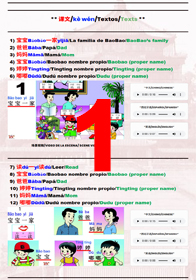
课文/Textos/Texts
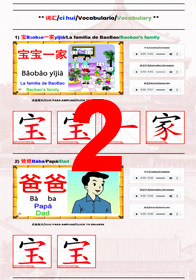
词汇/Vocabulario/Vocabulary
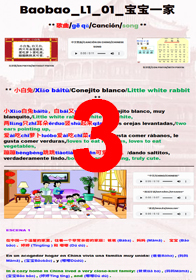
补充材料/Materiales adicionales/Additional Materials

PDF与视频/PDF y videos/PDF and Videos
边玩边学/Aprenda jugando/Learn by Playing
学习西班牙语/Aprenda Español/Learn Spanish
